Clear transaction History

Make your banking app an everyday companion

Empower your app with clear transaction history and provide the merchant's accurate name and logo, payment category, GPS location, and other useful merchant information for each transaction.

Banking app UI displaying enriched payment transaction history with merchant names, logos, categorisation and details
Let your clients know exactly what they paid for

Would you use and trust an app that mystifies you with the information it displays? Probably not, and neither would your clients. Change that by turning confusing information into actionable insights with enhanced data.

Why bring clarity into client transactions?

Join digital banking leaders

Strengthen your credibility by accurately portraying how you manage users’ finances. Improved NPS, app ratings, and overall engagement will attract new loyal customers.

Gauge visual with red to green gradient showing range from 'Needs Improvement' to 'Excellent'.

Lower chargebacks

Reduce the cost of dealing with chargebacks by ensuring that clients know exactly what they are paying for and have no reason to claim their payments.

Outcomes of reducing chargebacks: feedback, cost savings, and freed resources.

Increase card usage

Motivate card holders to make more frequent card payments by delivering a clear and insightfull overview of their payments and finances.

Showing card payments with clean transaction labeling helps boost usage.

Boost mobile app engagement

Build high-value features for your app and give users a reason to use it every day.

User engaging with a banking app offering clear payment history and smart insights

How to deliver clarity to your transactions?

Reveal the merchant's true name

Bring clarity from the start with accurate and country localised merchant name

Example of accurate merchant naming in payment transaction history to improve user trust
Banking interface displaying merchant logos for visual clarity in transaction lists

Add layer for visual recognition

Take advantage of a database of over 44k unique high quality logos respecting brand guidelines of merchants.

Drive payment insights with superior categorisation

Tag and segment individual transactions to give users deep insight into their personal finances.

Categorized transactions in a banking app showing spending behavior patterns
Display of merchant’s contact information and GPS-based location for a user’s transaction.

Provide even more actionable insights

icon check
Show the real location of a purchase
based on GPS coordinates
icon check
Leverage more business insights
through Google Place ID

Distinguish various payment methods

Paypal is not the actual merchant your customers are buying from. Let your customers know who they are really paying.

We recognise 65+ payment gateways and methods.

Tapix recognises 65+ payment gateways including Amazon Pay, Stripe, Zettle, Klarna etc.
Example of enriched banking transaction with phone, logo, merchant name, and category.

Simplify users' path to merchants

Provide users with seamless access to merchants, whether they are simply ordering pizza or contacting customer support.

icon check
Display merchant contact information
with URL address
icon check
Display merchant contact phones

Deliver the best UX

Discover other data solutions that amplify your application engagement and take your user experience to the next level.

Banking app UX with merchant logos, GPS-based transaction location, and spending insights

Be a step ahead

Industry insights
blog post image

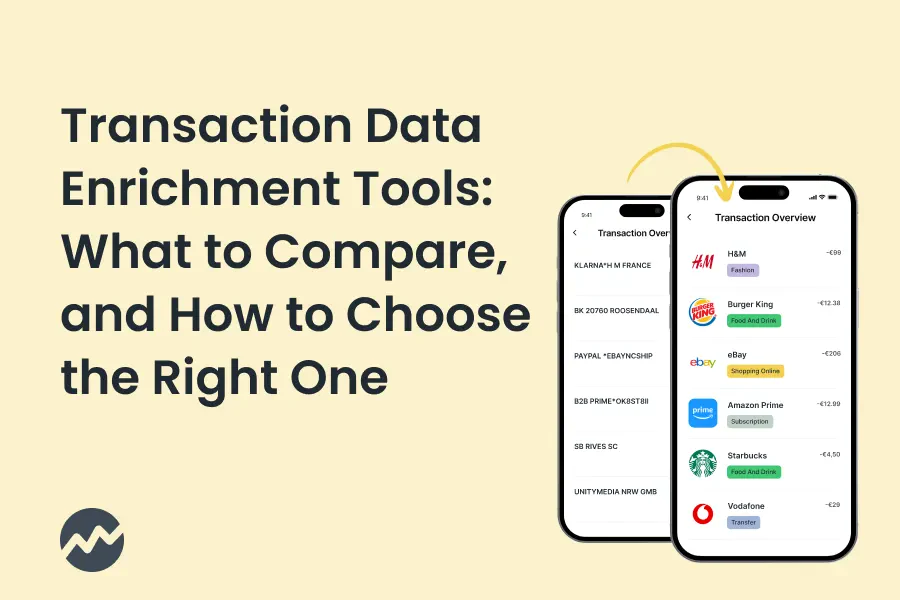
Transaction Data Enrichment Tools: What to Compare, and How to Choose the Right One

When you’re looking for transaction data enrichment tools and their features, six vendors usually come up: Tapix, Tink, Ethoca, Salt Edge, Fiserv, and Plaid. Most comparison posts treat them as interchangeable API swaps. They are not. They sit at different layers of the stack, they solve different problems, and picking the wrong one means paying for capabilities you do not need while missing the ones you do. This article walks through what each tool actually does, what it does not, and how to match them to the problem you are trying to solve.
Industry insights
blog post image

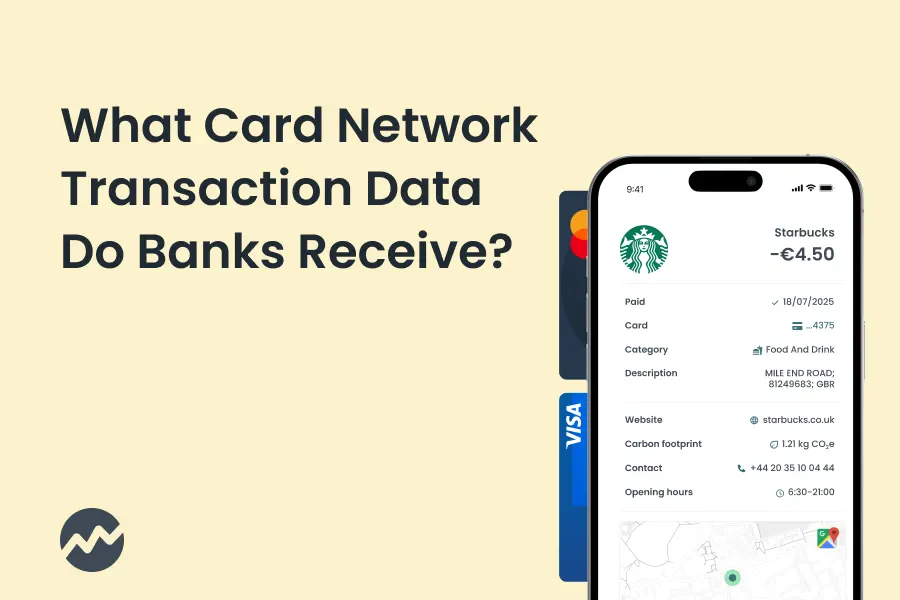
What Card Network Transaction Data Do Banks Receive?

When a customer taps their card, the bank's issuer system receives a tightly structured but surprisingly thin bundle of card network transaction data. The fields are standardised, the values are constrained, and most of what an end user expects to see in their app - clean merchant names, logos, recognisable categories, exact shop locations - is simply not in the message. Everything from statement clarity to credit decisioning is built downstream of this raw payload, which makes the gap between what arrives and what a customer needs the single most consequential data problem in retail banking.
Industry insights
blog post image

What Is CCD2 and What It Means for Transaction Data in Lending & BNPL

The EU's revised Consumer Credit Directive (CCD2 for short) is about to change the rules for consumer lending and BNPL across Europe. By November 2026, lenders will need to prove that borrowers can actually afford what they're signing up for. That puts transaction data at the centre of every credit decision.

Switch to Tapix today!

Explore how Tapix can help you get the most from transaction data, increase your app engagement and turn UX into your competitive advantage.

Before and after comparison of mobile banking app with Tapix transaction data enrichment